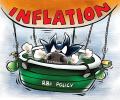
Reserve Bank on Wednesday said it expects retail inflation at 5.2 per cent in the first half of the current fiscal and revised downwards the target to 5 per cent for the quarter ended March. While headline inflation at 5 per cent in Feb 2021 remains within the tolerance band, some underline constituents are testing the upper tolerance level. Going forward, the food inflation trajectory will critically depend on the temporal and special progress of southwest monsoon in the 2021 season, RBI Governor Shaktikanta Das said on Wednesday while announcing the first monetary policy for the current fiscal. Reserve Bank of India (RBI) has kept the key repo rate unchanged at 4 per cent to support growth in the current situation.

Retail inflation in April softened further and fell to a four-month low of 4.87 per cent.

'Once the market decides it wants to go up, it goes up -- no amount of bad news can really hold it back.'

Indian bank credit expanded by 16.08 per cent year-on-year in FY26, marking its fastest pace since FY24, while deposits grew by 13.47 per cent, according to RBI data. Experts caution that year-end figures may be inflated due to reporting date changes, but acknowledge strong momentum in corporate, MSME, and retail segments.
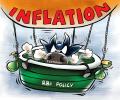
RBI Governor Shaktikanta Das on Friday said that inflation is on a declining trajectory, as it has fallen by 170 basis points from its January 2020 peak. Retail inflation fell to four-month low of 5.91 per cent in March over the previous month, mainly due to easing food prices.

The inflation in the food basket spiked to 7.89 per cent in October 2019 as against 5.11 per cent the preceding month.

RBI will be considering this set of data for formulating its next bi-monthly monetary policy on October 5.

Subdued prices of vegetables, cereals and dairy products pushed down retail inflation to a three-month low of 8.28 per cent in May.
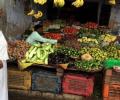
Fruits, vegetables and eggs continued to witness deflationary trend during January this year, with their prices declining 4.18 per cent, 13.32 per cent and 2.44 per cent, respectively.
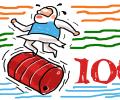
'Once the currency goes out of the hand, then possibly your major challenge is that it will not come back.'

Wholesale price inflation (WPI) declined to a 14-month low of 0.39 per cent in May on easing prices of food articles and fuel, and experts said geopolitical tensions could push up prices.

Retail inflation rises to 4.41% in Sep on dearer food items
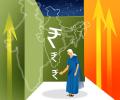
The World Bank has affirmed India's strong position to withstand the current global energy shock, citing high foreign exchange reserves, fiscal space, and low inflation as key buffers supporting continued growth despite international headwinds.

In an event-heavy week ahead, stock markets are expected to track Q3 corporate earnings from several blue-chip firms, including TCS and Infosys, while inflation data and global trends would also dictate investors' sentiment, analysts said.
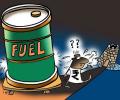
The wholesale price-based inflation accelerated to a record high of 12.94 per cent in May, on rising prices of crude oil and manufactured goods. Low base effect also contributed to the spike in WPI inflation in May 2021. In May 2020, WPI inflation was at (-) 3.37 per cent. This is the fifth straight month of uptick seen in the wholesale price index (WPI)-based inflation. In April, 2021, WPI inflation hit double digit at 10.49 per cent. "The annual rate of inflation, based on monthly WPI, was 12.94 per cent for the month of May, 2021 (over May, 2020) as compared to (-) 3.37 per cent in May 2020.
.jpg)
A Reuters poll had forecast retail inflation would edge up to 8.48 per cent from 8.31 per cent in March.

Economic affairs secretary S C Garg said that all macroeconomic parameters are performing well.

The Reserve Bank of India (RBI) on Wednesday kept its policy interest rate unchanged at 5.5 per cent for the second consecutive time, citing concerns over tariff uncertainties.

New demat account additions in India reached an 11-month low in March, with only 2.15 million new accounts opened, significantly below the 12-month average. This slowdown is attributed to a sharp decline in equity markets, escalating West Asia tensions, and increased crude oil prices impacting India's economic outlook.

Bajaj Auto reported a significant increase in its consolidated Q4FY26 performance, with profit after tax more than doubling to approximately 3,662 crore, a 103 per cent year-on-year rise, primarily driven by record volumes, an improved product mix, and the strategic consolidation of Bajaj Auto International Holdings AG (BAIHAG).

India's industrial production grew by 1 per cent in December, official data showed on Friday. According to the Index of Industrial Production (IIP) data, the manufacturing sector output grew by 1.6 per cent in December 2020.
The RBI, which mainly factors in CPI for arriving at its bi-monthly monetary policy, has been mandated by the government to ensure that inflation remains at 4 per cent, with deviation of 2 per cent on either side.

The central bank is yet to consider actions such as a rate hike or mobilising dollar inflows from non-resident Indians to boost forex reserves as it cannot afford to continue with them for long when the rupee's internationalisation tops its agenda, explains Tamal Bandyopadhyay.

Retail inflation declined marginally to 9.86 per cent in July due to lower prices of spices, cereals and its products although prices of vegetables remained high during the month.
Shifting its stance of monetary policy towards targeting retail inflation as it is an "inequitable tax", RBI today said it may exceed 8 per cent by March end and efforts will continue to bring it down.
Retail inflation moved up marginally to 10.36 per cent in May on account of increase in prices of vegetables, edible oils and milk.
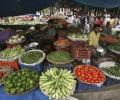
The pace of retail price rise in January 2016 is the highest since 6.46 per cent in September 2014.

Silver prices surged by Rs 11,800 to Rs 2.57 lakh per kg and gold advanced by Rs 3,000 to Rs 1.58 lakh per 10 grams in the national capital, driven by fresh buying from jewellers and stockists ahead of Akshaya Tritiya.
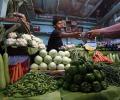
Retail inflation in March inched up to 8.31 per cent from 8.03 in February, mainly on account of a rise in fruit and vegetable prices.
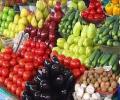
The rate of price rise was at 6.77 per cent in June last year.

In the urban areas, the CPI rose to 10.19 per cent during the month as compared to 10.10 per cent in July.

This development can strengthen the case for interest rate cut by the RBI.
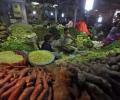
Items such as cereals and products, meat and fish, oils and fats became cheaper

WPI inflation data, trading activity of foreign investors and global cues would dictate trends in the stock market this week, analysts said.

Analysts warn that global markets are significantly underpricing the risk of an oil price shock, with Brent crude potentially soaring to $150 per barrel if the West Asia conflict escalates or damages critical oil and gas infrastructure. This could lead to severe inflation and economic repercussions, particularly for import-dependent nations like India.
Private bus operators in Sri Lanka warn of potential service disruptions and a nationwide strike due to significant fuel price increases, impacting public transport and raising concerns about inflation.
Wholesale price inflation dropped to 0.85 per cent in April as prices of food articles, manufactured products, and fuel eased, government data showed on Wednesday. WPI-based inflation was 2.05 per cent in March. It was 1.19 per cent in April last year.

The Urjit Patel committee on monetary policy framework has proposed setting up of a monetary policy committee (MPC) that will be headed by the Reserve Bank of India (RBI) governor and accountable for achieving inflation target set by it.

If the conflict continues for a prolonged period, State-run oil companies may have to review retail fuel prices accordingly.

The Chhattisgarh Anti-Corruption Bureau/Economic Offence Wing (ACB/EOW) has filed a supplementary chargesheet against four individuals for alleged irregularities in the procurement of medical equipment and reagent chemicals in 2023, resulting in significant financial losses to the state.
